Showing posts with label hacking. Show all posts

Wednesday, March 4, 2015

Lab grown quartz crystals: How its done.

Following up on yesterdays post regarding the manufacture of radio crystals from natural quartz crystals, I was able to find this video from the AT&T archives showing the relatively new, at the time, method of growing quartz crystals in the laboratory.

The video, produced in 1962, shows first the frustrating failures and ultimately the ability of Bell Labs staff to reliably produce the invaluable quartz crystals.

Very little of the technology we value today would have been possible without the hard work and perseverance of these early pioneers.


Sunday, December 1, 2013

Where to find the $20 Software Defined Radio?

A while back I wrote a blog post about the availability of $20 software defined VHF/UHF radios in the form of re-purposed USB digital television dongles.

Now-days, with the improvements in software and documentation, the hardest part is finding the right dongle. What you order from EBay, and what you receive, can be two different things and only some of the dongles are suitable for use as VHF/UHF software defined radios.

So, I was pleased to see that at least one hobbyist electronics supplier has sought out and supplies a suitable device for SDR at a fair price :
Adafruit has available the USB dongle and "antenna" suitable for experimentation for $22.50, not far from the EBay (direct from China) price.

Click here to go directly to the product page: Software Defined Radio Receiver USB Stick - RTL2832 w/R820T

No, I didn't receive a free evaluation unit and I don't work for Adafruit ... I'm just glad to see these useful devices available from a local company with an increased chance of you "Getting what you paid for."

Adafruit also helpfully stock the adapter cables to convert the less common MCX antenna connector into the much more common BNC connector: MCX Jack to BNC RF Cable Adapter

Monday, July 9, 2012

The $20 Software Defined Radio

Introduction:

Despite my interest in boat-anchors I do find myself peeking 'over the wall' from time to time and taking a look at new and emerging technologies. After several demonstrations from friends I had become convinced of the incredible potential of software defined radios and even found thinking about owning one ... one day.

Perhaps the best known SDR in amateur radio circles are the FLEX rigs from FlexRadio. I had the chance to see a FLEX-3000 in use during Winter Field Day 2011 and had to admit that, barring the lack of knobs & dials, it was a very impressive rig!

One thing stopped me from running out and buying one straight away was the cost and perhaps the notion that once the new had worn off I would regret the significant outlay required to own the blue box. So, I shelved the idea of owning an SDR and found other things to occupy my time.

This changed when a post on www.reddit.com/r/amateurradio/ mentioned an unmodified digital TV receiving USB device that had been used as a software defined receiver in the 60MHz - 1.7GHz range. The best part was the cost, around $20 for most examples of this kind of device. Finally software & commodity hardware had come together to deliver useful receiver that everyone can afford.

The nuts and bolts:

There are specific parts required to put together your own $20 SDR but I will document what I used to get mine running and hopefully you can follow along.

Hardware: The device that I used was a Ezcap EZTV668 DVB-T Digital TV USB 2.0 Dongle purchased from DealExtreme. The part was shipped from Asia and I gather from reading else ware that DealExtreme is a middleman and not the actual supplier. Be prepared to wait a while if ordering from this supplier, my Ezcap took about 3 weeks to arrive but I have heard that a month or more is not uncommon.

The upside is that shipping is free and your purchase involves 0% tax, this really IS a $20 SDR.

This particular DVB-T dongle uses the RTL2832U chip which is required for use as an SDR, other dongles with this chip may work but if it does not have the RTL chip it will NOT work currently.

Software (Linux) : After poor results with the software running on MS Windows I moved across to Linux and got it working well there. I can't point you to a single howto for this because I used several different guides and tried a few things before it started working. The most helpful, and probably all you really need, are the build-gnuradio script which gets hardware support and gnu-radio running and the "Getting Started With RTL-SDR" page by Tom Nardi which covers installing Gqrx. All the software used is in development and requires familiarity with the command line to install and use at the moment.

Software (Windows) : I had another shot at getting the MS Windows software running and stumbled across the excellent website http://rtlsdr.org. Rtlsdr.org mentions using a new version of SDR# software which worked very well! 
I would recommend following the instructions under the Windows Software section, this had me up and running in a matter of minutes. Follow the instructions EXACTLY, I made life hard on myself by not paying attention to details and I think was responsible for my earlier issues.

Going further - Antenna : The stock antenna that is supplied with the Ezcap EZTV668 is sufficient for testing but you'll want to add something a bit more substantial for regular use. You may even want to remove the existing (hard to find) antenna connector from the board and install a standard connector and a less flimsy metal casing. This will help with RF shielding and temperature stability. 
If you are going to use a larger antenna, especially an outside antenna, you'll want to check to make sure a protection diode has been fitted to the input. The Ezcap EZTV668 is a very inexpensive device and others have found units in which the protection diode was not fitted to save costs.

Going further - 160M - 6M ? : I've just seen an interesting blog post titled FunCube Upconverter where the author, George Smart, has built a converter allowing the reception of 160M - 6M using the FunCube dongle. The FunCube is functionally the same as the RTL dongles available for $20. For any home brewers out there this could be a great project as George has included all the details including schematics and board artwork required to build the converter.


Update : Thanks to a link from Neil W2NDG to an EBay sale I've been able to track down a pre-assembled HF up-converter on this page : New HF Converter Kit for the SDR Fun Cube Dongle The price seems to be 45 euros, or about $55 US.

I've had a lot of fun using the $20 SDR to listen to AM aircraft traffic, local repeaters, emergency services and amazingly good quality broadcast FM stereo programming. Its easy to see, with an SDR, just how wide a radio broadcaster is transmitting and move your filter bandwidth to match.

Hopefully this is just the beginning of inexpensive SDR hardware that the radio community can re-purpose and re-engineer. 

Thursday, April 26, 2012

Something old, something new.

Something old ...

As a young boy in Australia my two favorite hangouts were my grandfather's shed or practically anywhere that electronics were sold. The two largest electronic component retailers in my home town were Tandy (Radio Shack) and Dick Smith Electronics. They both sold kits, tools, '100 in 1 Labs' and other assorted gear but Dick Smith eventually became known as the experimenters store due to their greater range.

Original Radio Shack calculator
Tandy is now almost vanished after their aquisition by Woolworths (Despite also owning its competitor Dick Smith) and has converted or closed most of the locations. 

One of the things I have to remember Tandy by is a handy resistor color code calculator. It saw a lot of use in past years while I built kits and experimented but not so much nowdays.

This device also calculated inductor values when flipped over which was handy for some of the older equipment I came across.

If you would like to make one of these yourself then Adafruit Industries has created a PDF document you can print and cut out for create your own resistor value calculator.

The PDF file is available from Adafruit Industries or a copy is also here. Once you print it out, a little cutting and folding should produce something like the example of the right. The Adafruit design uses brass paper fasteners (remember those?) but any fastener could be used that would allow the wheel inside to rotate freely. It would be best to print on heavy card stock if you have the ability as it will give the calculator some strength.

Something new ... 

If you happen to have one of those new fangled iDevices you can download Circuit Playground. It has a few more features than the old Radio Shack calculator and looks great on the iPad.


More features are being added but the list at the moment includes:
  • Decipher resistor & capacitor codes with ease
  • Calculate power, resistance, current, and voltage with the Ohm's Law & Power Calc modules
  • Quickly convert between decimal, hexadecimal, binary or even ASCII characters
  • Calculate values for multiple resistors or capacitors in series & parallel configurations
  • Store, search, and view PDF datasheets
  • Access exclusive sneak peaks, deals & discounts at Adafruit Industries
You can download it from the iTunes Store or, if you have an Android, you can check out ElectroDroid for similar functionality.

As time goes on there are more and more useful utilities available for electronic experimenters on iOS and Android devices. Since more and more equipment today is becoming computerized do iOS and Android devices  represent the future of test equipment?

iMSO-104 iPad Oscilloscope

Wednesday, March 21, 2012

Ham Radio and Mesh Networks

Lately I've been fascinated by the capabilities of mesh networks. The ability to quickly create ad-hock computer networks could be an invaluable resource for amateur radio operators in general and particularly for emergency communications (EMCOM)

Linksys WRT54GL Router
The particular device and software I have been experimenting with is the Linksys WRT54G router and HSMM-MESH firmware from http://hsmm-mesh.org/.

Installing the HSMM-MESH firmware changes the way the Linksys router functions and allows it to automatically connect to other HSMM routers in a mesh network. No special configuration is required after setting your callsign. All TCP/IP configuration is pre-configured, even down to automatically assigning addresses to connecting clients.

Mesh Network Diagram
Mesh networks are highly fault tolerant. Every router in the network is aware of every other router and has the ability to move network packets through from one unit to another provided there is a link, or chain of linked routers, between them.
In the diagram to the right each router is represented by a numbered circle. If router number 6 were to fail then network packets that needed to move between router 1 and 7 would travel through routers 2 & 3 or 5 & 10 until 6 was repaired. All this happens automatically and quickly enough so that there is no disruption to the traffic.

Anything you can access on a normal computer network can be made to work on a mesh network. Some of the services that have been demonstrated include email, voice over IP (VOIP), video conferencing, file sharing, web servers & groupware applications.

With simple modified antennas the modest output power from the WRT54G (100 to 200mW) can be used to reach distances of many miles or tens of miles with directional antennas. Mounting the router on a mast in a sealed enclosure can reduce losses from long cable runs while running off 12V power makes them compatible with ham radio power sources including solar and wind power.

The example to the left is from NG5V located on hsmm-mesh.org and consists of an omni-directional external antenna and a lawn sprinkler controller box from a popular home improvement store.

Did you know that ... Frequencies used by channels one through six of 802.11b and 802.11g fall within the 2.4 GHz amateur radio band. Licensed amateur radio operators may operate 802.11b/g devices under Part 97 of the FCC Rules and Regulations, allowing increased power output but not commercial content or encryption.

I hope to acquire a few more WRT54G routers and put together a mesh network in the Katy TX area as a resource for experimentation and education in an area not normally touched upon by regular amateur radio operators. Who knows what the future holds & it behooves us to investigate this technology and bend it to our own needs.

The Amateur is Progressive ... He keeps his station abreast of science. It is well built and efficient. His operating practice is above reproach.

Monday, January 16, 2012

Homebrew Hero - Homemade NBTV video recording system in 1974

What do you do in 1974 if you are 20 years old and want to send video to other Amateur Radio operators?

An off-the-shelf home-video camera was the equivalent of $8000 USD (if you could find one) and the circuitry required to transform the high bandwidth signal into one that could be transmitted on AM would have been prohibitively complex.

Believe it or not the only solution was to build your own narrow band video camera! These creations followed on from narrow band television work done in the 1930's and took advantage of advances in materials and solid state technology.

The camera used by VK3AML (Chris Long) in the video below was a Flying Spot Scanner camera which required a completely darkened room and used a spot of light that scanned the scene. The reflected light was picked up by a photomultiplier tube and recorded as a frequency modulated audio tone on tape or broadcast via radio.

We're fortunate to have some of the original video preserved from 1974 since the audio and video signals had been recorded onto open-reel tape.


The 30 line television system developed by John Logie Baird in the 1930s allowed home experimenters to build their own equipment, a practice which still exists today through the Narrow-bandwidth Television Association. Relatively few narrow-band TV signals are transmitted nowadays so most amateur radio operators are unaware of this special interest group.

The video below shows some of the actives and projects that members of the Narrow Band Television Association have been involved in and gives some historical background on this interesting field.


Chas (WA1JFD) from the Antique Radio forums mentions that at approximately the same time other amateur radio operators such as Donald Mara (WA1PLT) were experimenting with Slow Scan Television (SSTV). SSTV sent higher resolution pictures at a slower frame rate, typically taking 8 seconds to send a complete image. Below is a picture of some of the first commercial SSTV equipment that was made available to US hams.

Robot 70 (monitor) & 80 (camera) SSTV system introduced in 1970
I wasn't able to find exact prices for SSTV equipment like the ROBOT 70 & 80 but period articles seem to indicate you wouldn't get much change from $1000 in 1970 for a complete SSTV station. This is equal to around $5000 USD today.

Friday, January 13, 2012

An oscilloscope clock - Recycling vintage equipment without destroying it.

As a fan of vintage electronics, and vintage technology in general,  I love to see things being re-used rather than being dumped in the trash. This has the very desirable effect of preventing sometimes toxic chemicals from being released into the environment and reduces the demand for new parts that can also involve toxic chemicals during their manufacture.

The only downside to this recycling is that frequently the original function of the equipment is lost so I was pleased to see this creation from Bob Alexander. He has combined one of the oldest types of test equipment with some of the newest microprocessor based devices to bring us a Oscilloscope Clock that still functions as an oscillloscope!

Heathkit oscilloscope with AVR Oscilloscope Clock module
Bob ran into some problems while installing the AVR Oscilloscope Clock Module but was able to invert the horizontal output from the clock module before feeding it into the scope. To read about his build in detail have a look at : An Oscilloscope From the Trash

A small modification to the rear panel to allow setting the clock and switching between clock and scope.
Check the video below for a demonstration of the Sparkfun AVR Oscilloscope Clock Module in action on a significantly newer oscilloscope.

Monday, January 9, 2012

PACO C-25 Capacitor Tester

I recently attended the Houston Vintage Radio Association post holiday dinner and participated in the auction held after the meal. It was a great evening and if you have any interest in vintage radio I would suggest getting in touch with the HVRA and becoming a member.
Among other things I walked away with at the end of the evening was a PACO Model C-25 capacitor tester.

The PACO C-25 differs from my Healthkit IT-22b in that it tests both regular and electrolytic capacitors as well as using a 40Mc oscillator to enable a rough measure of capacitance using a bridge circuit.
Most of the time, with vintage vacuum tube equipment, capacitor values need only be "in the ballpark" to function perfectly so a high degree of accuracy is not required. For more accuracy I have a Heathkit impedance/capacitance bridge if required.
I have my doubts how accurate the tester would be when measuring capacitance "in circuit" but otherwise it looks to be a very useful bit of kit!
The users manual should be available here and the circuit diagram is shown below.


Friday, January 6, 2012

More cheap power supplies ...

Looks as though more folks have been putting "bargain" power supplies to the test and finding them wanting. This time it is a 5 volt USB power supply purchased in the UK that fails to deliver its advertised load.

At 560mA load the voltage has already fallen below 3 Volts, a far cry from its rated 1 Amp!
As most power supplied are simply featureless black boxes it would be nice to be able to rely on the specifications stated on the outside ... sadly you can't as the video below shows.

Thursday, January 5, 2012

Cheap accessories can damage your expensive electronics

The power supply below looks just like a normal Canon power supply, right down to the correct model number and style. If you dig deeper, or just try and use this power supply, you start to notice things aren't exactly what they appear to be.


It seems as though there are some great deals to be had on Ebay for electronic accessories but like the saying goes, "You get what you pay for!".
Giorgos discovered the difference when his Canon camera started behaving strangely and was fortunate enough to have the experience and the test equipment to show just how poorly his bargain power supply performed.
So, before you buy a cheap power supply or battery charger for your cell phone, camera or iDevice, check out the video below and decide for yourself if its really worth saving a few dollars.

Monday, January 2, 2012

Deathrays and the garage home-brewer

In days past home-brewers would often be at the forefront of new and developing technologies. Apple Computer got their start in a suburban garage, Marie Curie refined radium in little more than a garden shed and the founders of Hewlett Packard worked out of a home garage in Palo Alto.

Unfortunately we moved away from encouraging kids to "tinker" in the garage and instead we've supplied ready made entertainment in the way of game consoles, demographically targeted TV and an endless series of extra-curricula activities ... all ultimately aimed at preventing boredom and keeping kids busy.

To see some impressive tinkering, take a look at this great build from Teravolt.org. Its certainly something that could be dangerous if used incorrectly but the assumption that something is unsafe unless proved otherwise and the knowledge to know the difference is sometimes better that relying on a commercial manufacturer's assurance that everything is ok ... because sometimes it isn't.

X-Ray Machine from Teravolt.org
I don't think well raised kids will take to the streets in rampaging mobs if they are allowed to become 'bored' and I think there is the possibility that through their inventiveness they will discover and create things we haven't even imagined. Given the tools, basic education & a measure of respect we could see more garage pioneers in the coming years. While I understand the value of robot kits and 'following directions' I am more enthusiastic about the Maker movement and the great selection of micro-controllers and electronic building blocks they have created.

Looking through a hard-drive using the Teravolt.org X-Ray source

Saturday, December 31, 2011

New video from ARRL : The DIY Magic of Amateur Radio

From the ARRL:
ARRL's new video, "The DIY Magic of Amateur Radio," is an 8-minute video that follows some of the innovative, imaginative and fun ways "hams" use radio technology in new and creative ways. The presentation is directed toward the DIY (do it yourself) movement, which is inspiring a new generation of creators, hackers and innovators. The message should be helpful for existing members to shape the ways they understand and talk about ham radio.


Wednesday, December 28, 2011

A gentlemen hacker, circa 1903

From New Scientist:

A century ago, one of the world’s first hackers used Morse code insults to disrupt a public demo of Marconi's wireless telegraph
LATE one June afternoon in 1903 a hush fell across an expectant audience in the Royal Institution's celebrated lecture theatre in London. Before the crowd, the physicist John Ambrose Fleming was adjusting arcane apparatus as he prepared to demonstrate an emerging technological wonder: a long-range wireless communication system developed by his boss, the Italian radio pioneer Guglielmo Marconi. The aim was to showcase publicly for the first time that Morse code messages could be sent wirelessly over long distances. Around 300 miles away, Marconi was preparing to send a signal to London from a clifftop station in Poldhu, Cornwall, UK.
Yet before the demonstration could begin, the apparatus in the lecture theatre began to tap out a message. At first, it spelled out just one word repeated over and over. Then it changed into a facetious poem accusing Marconi of "diddling the public". Their demonstration had been hacked - and this was more than 100 years before the mischief playing out on the internet today. Who was the Royal Institution hacker? How did the cheeky messages get there? And why?
It had all started in 1887 when Heinrich Hertz proved the existence of the electromagnetic waves predicted by James Clerk Maxwell in 1865. Discharging a capacitor into two separated electrodes, Hertz ionised the air in the gap between them, creating a spark. Miraculously, another spark zipped between two electrodes a few metres away: an electromagnetic wave from the first spark had induced a current between the second electrode pair. It meant long and short bursts of energy - "Hertzian waves" - could be broadcast to represent the dots and dashes of Morse code. Wireless telegraphy was born, and Marconi and his company were at the vanguard. Marconi claimed that his wireless messages could be sent privately over great distances. "I can tune my instruments so that no other instrument that is not similarly tuned can tap my messages," Marconi boasted to London's St James Gazette in February 1903.
That things would not go smoothly for Marconi and Fleming at the Royal Institution that day in June was soon apparent. Minutes before Fleming was due to receive Marconi's Morse messages from Cornwall, the hush was broken by a rhythmic ticking noise sputtering from the theatre's brass projection lantern, used to display the lecturer's slides. To the untrained ear, it sounded like a projector on the blink. But Arthur Blok, Fleming's assistant, quickly recognised the tippity-tap of a human hand keying a message in Morse. Someone, Blok reasoned, was beaming powerful wireless pulses into the theatre and they were strong enough to interfere with the projector's electric arc discharge lamp.
Mentally decoding the missive, Blok realised it was spelling one facetious word, over and over: "Rats". A glance at the output of the nearby Morse printer confirmed this. The incoming Morse then got more personal, mocking Marconi: "There was a young fellow of Italy, who diddled the public quite prettily," it trilled. Further rude epithets - apposite lines from Shakespeare - followed.
The stream of invective ceased moments before Marconi's signals from Poldhu arrived. The demo continued, but the damage was done: if somebody could intrude on the wireless frequency in such a way, it was clearly nowhere near as secure as Marconi claimed. And it was likely that they could eavesdrop on supposedly private messages too.
Marconi would have been peeved, to say the least, but he did not respond directly to the insults in public. He had no truck with sceptics and naysayers: "I will not demonstrate to any man who throws doubt upon the system," he said at the time. Fleming, however, fired off a fuming letter to The Times of London. He dubbed the hack "scientific hooliganism", and "an outrage against the traditions of the Royal Institution". He asked the newspaper's readers to help him find the culprit.
He didn't have to wait long. Four days later a gleeful letter confessing to the hack was printed by The Times. The writer justified his actions on the grounds of the security holes it revealed for the public good. Its author was Nevil Maskelyne, a mustachioed 39-year-old British music hall magician. Maskelyne came from an inventive family - his father came up with the coin-activated "spend-a-penny" locks in pay toilets. Maskelyne, however, was more interested in wireless technology, so taught himself the principles. He would use Morse code in "mind-reading" magic tricks to secretly communicate with a stooge. He worked out how to use a spark-gap transmitter to remotely ignite gunpowder. And in 1900, Maskelyne sent wireless messages between a ground station and a balloon 10 miles away. But, as author Sungook Hong relates in the bookWireless, his ambitions were frustrated by Marconi's broad patents, leaving him embittered towards the Italian. Maskelyne would soon find a way to vent his spleen.
Nevil Maskelyne
One of the big losers from Marconi's technology looked likely to be the wired telegraphy industry. Telegraphy companies owned expensive land and sea cable networks, and operated flotillas of ships with expert crews to lay and service their submarine cables. Marconi presented a wireless threat to their wired hegemony, and they were in no mood to roll over.
The Eastern Telegraph Company ran the communications hub of the British Empire from the seaside hamlet of Porthcurno, west Cornwall, where its submarine cables led to Indonesia, India, Africa, South America and Australia. Following Marconi's feat of transatlantic wireless messaging on 12 December 1901, ETC hired Maskelyne to undertake extended spying operations.
Maskelyne built a 50-metre radio mast (the remnants of which still exist) on the cliffs west of Porthcurno to see if he could eavesdrop on messages the Marconi Company was beaming to vessels as part of its highly successful ship-to-shore messaging business. Writing in the journal The Electrician on 7 November 1902, Maskelyne gleefully revealed the lack of security. "I received Marconi messages with a 25-foot collecting circuit [aerial] raised on a scaffold pole. When eventually the mast was erected the problem was not interception but how to deal with the enormous excess of energy."
It wasn't supposed to be this easy. Marconi had patented a technology for tuning a wireless transmitter to broadcast on a precise wavelength. This tuning, Marconi claimed, meant confidential channels could be set up. Anyone who tunes in to a radio station will know that's not true, but it wasn't nearly so obvious back then. Maskelyne showed that by using an untuned broadband receiver he could listen in.
Having established interception was possible, Maskelyne wanted to draw more attention to the technology's flaws, as well as showing interference could happen. So he staged his Royal Institution hack by setting up a simple transmitter and Morse key at his father's nearby West End music hall.
The facetious messages he sent could easily have been jumbled with those Marconi himself sent from Cornwall, ruining both had they arrived simultaneously. Instead, they drew attention to a legitimate flaw in the technology - and the only damage done was to the egos of Marconi and Fleming.
Fleming continued to bluster for weeks in the newspapers about Maskelyne's assault being an insult to science. Maskelyne countered that Fleming should focus on the facts. "I would remind Professor Fleming that abuse is no argument," he replied.
In the present day, many hackers end up highlighting flawed technologies and security lapses just like Maskelyne. A little mischief has always had its virtues.
Paul Marks is senior technology correspondent for New Scientist

Tuesday, December 27, 2011

What we can learn from a Mexican drug cartel.

The AP carried the following article detailing an extensive, low cost & flexible radio repeater system employed by a Mexican drug cartel to coordinate their operations. The system seems to exceed the sophistication of regular amateur radio linked repeaters while improving on independence from grid power. America's ham radio community has the required technology, know-how and government support to upgrade our repeater systems ... what is stopping us from pushing the technology further?

Mexico's cartels build own national radio system


MEXICO CITY (AP) — When convoys of soldiers or federal police move through the scrubland of northern Mexico, the Zetas drug cartel knows they are coming.
The alert goes out from a taxi driver or a street vendor, equipped with a high-end handheld radio and paid to work as a lookout known as a "halcon," or hawk.
The radio signal travels deep into the arid countryside, hours by foot from the nearest road. There, the 8-foot-tall (2-meter-tall) dark-green branches of the rockrose bush conceal a radio tower painted to match. A cable buried in the dirt draws power from a solar panel. A signal-boosting repeater relays the message along a network of powerful antennas and other repeaters that stretch hundreds of miles (kilometers) across Mexico, a shadow communications system allowing the cartel to coordinate drug deliveries, kidnapping, extortion and other crimes with the immediacy and precision of a modern military or law-enforcement agency.
The Mexican army and marines have begun attacking the system, seizing hundreds of pieces of communications equipment in at least three operations since September that offer a firsthand look at a surprisingly far-ranging and sophisticated infrastructure.
Current and former U.S. law-enforcement officials say the equipment, ranging from professional-grade towers to handheld radios, was part of a single network that until recently extended from the U.S. border down eastern Mexico's Gulf coast and into Guatemala.
The network allowed Zetas operatives to conduct encrypted conversations without depending on the official cellphone network, which is relatively easy for authorities to tap into, and in many cases does not reach deep into the Mexican countryside.
"They're doing what any sensible military unit would do," said Robert Killebrew, a retired U.S. Army colonel who has studied the Mexican drug cartels for the Center for a New American Security, a Washington think tank. "They're branching out into as many forms of communications as possible."
The Mexican army said on Dec. 4 that it had seized a total of at least 167 antennas, 155 repeaters, 166 power sources, 71 pieces of computer equipment and 1,446 radios. The equipment has been taken down in several cities in the Gulf coast state of Veracruz and the northern states of Nuevo Leon, Coahuila, San Luis Potosi and Tamaulipas.
The network was built around 2006 by the Gulf cartel, a narcotics-trafficking gang that employed a group of enforcers known as the Zetas, who had defected from Mexican army special forces. The Zetas split from the Gulf cartel in 2010 and have since become one of the nation's most dominant drug cartels, with profitable sidelines in kidnapping, extortion and human trafficking.
The network's mastermind was Jose Luis Del Toro Estrada, a communications expert known as Tecnico who pleaded guilty to conspiracy to distribute cocaine in federal court in Houston, Texas, two years ago.
Using millions of dollars worth of legally available equipment, Del Toro established the system in most of Mexico's 31 states and parts of northern Guatemala under the orders of the top leaders in the Gulf cartel and the Zetas. The Gulf cartel boss in each drug-smuggling territory, or plaza, was responsible for buying towers and repeaters as well as equipping his underlings with radios, according to Del Toro's plea agreement.
Del Toro employed communications specialists to maintain and run the system and research new technology, according to the agreement.
Mexican authorities, however, presented a different picture of the cartel radio infrastructure, saying it was less monolithic than the one described by U.S. authorities. A Mexican military official denied that the army and navy have been targeting one network that covered the entire Gulf coast. The operations had been focused on a series of smaller, local systems that were not connected to each other due to technical limitations, he said.
"It's not a single network," the official told The Associated Press on condition of anonymity due to the sensitivity of the topic. "They use it to act locally."
In recent years, reporters traveling with the Mexican military have heard cartels using radio equipment to broadcast threats on soldiers' frequencies. The military official told the AP that the signals are now encrypted, but cartels are still trying to break in.
At least until recently, the cartel's system was controlled by computers that enabled complex control of the radio signals, allowing the cartel to direct its communications to specific radios while bypassing others, according to Grupo Savant, an intelligence and security consulting firm in Washington that has firsthand knowledge of Mexico's cartel operations.
The radio system appears to be a "low-cost, highly extendable and maintainable network" that shows the Zetas' sophistication, said Gordon Housworth, managing director of Intellectual Capital Group, LLC, a risk- and technology-consulting firm that has studied the structure and operations of Mexican cartels and criminal groups.
Other Mexican criminal organizations maintain similar radio networks, including the Sinaloa cartel, based in the Pacific coast state of the same name, and the Barrios Azteca street gang, which operates in Ciudad Juarez, across from El Paso, Texas, a U.S. law-enforcement official said. The Zetas' system is the largest, however, the official said, speaking on condition of anonymity because of the sensitivity of the topic.
The Mexican raids are "a deliberate attempt to disrupt the business cycle of the cartels," said one former law-enforcement official with direct knowledge of the network. "By going after command and communications you disrupt control."
Law-enforcement officials and independent analysts described the operations against the Zetas' communications system as significant short-term victories in the fight against the cartel.
"The seizures show that the organization is scrambling," said Steven Dudley, co-director of InSight, a group that analyzes and investigates organized crime in Latin America.
The longer-term impact is unclear. The cartel has had little difficulty in replacing radio gear and other equipment seized in smaller operations in recent years. And contacts among the highest-ranking Zetas operatives tend to take place in highly encrypted communications over the Internet, according to Grupo Savant.
Certainly, cartel radio equipment is a near-ubiquitous presence for Mexicans living along the front lines of the drug war.
In the state of Tamaulipas, across the border from eastern Texas, many antennas are concealed in the foliage of the rockrose, an invasive shrub that has spread across much of the state's open land.
Even from a few feet (meters) away it's nearly impossible to see the towers or their power cables.
In Nuevo Laredo, the Zetas' first stronghold, antennas sprout from rooftops and empty lots. One soldier told the AP that even when authorities took down an antenna there, it was swiftly replaced.
___
Associated Press writers E. Eduardo Castillo in Mexico City and Efrain Klerigan in Victoria, Tamaulipas, contributed to this report.

Sunday, December 18, 2011

Bad news for kit builders in the EU

G4ILO Writes ...

I’m not the first blogger to mention this item of news but it is certainly one topic that I could not allow to pass by without comment. According to the IARU Region 1 website, the EU Commission will be revising the EMC Directive and removing the exemption of amateur radio kits and modified equipment from its provisions. Products that are currently exempted would be subject to inspection and certification, a process which would make the production of kits hopelessly uneconomic. It would also potentially spell the end of home building and modification and prevent the importation of kits from the USA and other havens of relative sanity. No, this isn’t one of my April 1st spoof stories released from the Drafts folder by mistake!
I would hope that the IARU, the RSGB and other European amateur radio societies will make urgent representations to the EC to stop this proposal. But this is just one scary example of why I and many other like-minded people feel that we in the UK would be better off out of the European Union.
In fact, most of Europe would be better off without it in my opinion. Could somebody explain why, at a time when European governments are supposed to be cutting back on public expenditure, they continue contributing billions every year (only recently having voted an increase – the UK alone contributes £51 million per day) in order to fund this unelected and unaccountable Commission to employ people who live in cloud cuckoo land to produce unwanted, unnecessary and unasked-for legislation?

Original Article

Thursday, December 15, 2011

Better than X-Ray glasses

While not as simple as putting on a set of EM vision goggles this is still opens the window into visualizing radio waves and allows us to see what we previously had to imagine.


Greg Charvat N8ZRY just published this video showing off a very cool experiment with the low-cost coffee can radar system he and co-workers developed, in the fall of 2010, for MIT’s open courseware initiative.


In the video, Greg describes and demonstrates a simple circuit that causes a red/green LED on the receiving antenna to glow one color when the amplitude of the received wave is positive, and another when it is negative. Moving the LED back and forth in front of the transmitter, while taking a long-exposure photograph, gives a visual map of the wavefront in space.

Tuesday, December 13, 2011

Neurosurgical tool developed by amateur radio operator Dr. Kim H. Manwaring N7DFU

A University of Utah surgeon has performed the first successful procedure with the FMwand, a new medical device developed by Salt Lake City-based Domain Surgical that, in essence, acts as a bloodless knife, cauterizing as it cuts.

The device was invented in the Utah basement of a pediatric neurosurgeon, Dr. Kim Manwaring N7DFU. Manwaring was on a quest to find a material that could deliver precise heat. Tinkering in his basement with parts from a ham radio, he came up with the concept for the device and then came across a special alloy developed by a NASA engineer, which he used for the tip of the instrument.

The FDA recently cleared the device for use in humans. Joel MacDonald, M.D., a neurosurgeon with the University of Utah’s Clinical Neurosciences Center and an associate professor in the School of Medicine, used the FMwand during three surgical procedures this week—twice for spine surgeryand once for brain surgery.

Complete article at http://www.healthcanal.com/surgery-rehabilitation/24425-University-Utah-Surgeon-Uses-New-Bloodless-Knife-for-First-time-Humans.html

Tuesday, December 6, 2011

The Animals - House of the Rising Sun played on vintage electronics.

This must have taken a while to put together. The idea to use the scanner as a musical instrument is not new but getting it to play well is not easy. I think he did a great job in keeping the different devices in sync, particularly considering they don't share common interfaces or protocols!

Sunday, December 4, 2011

Build your own computer for $40 ? yes you can ...

FIGnition is a simple, educational computer, but a real one, not an emulator. It has real firmware, real RAM, really generates a display, really has storage for when you turn the machine off (roughly the size of an 80s floppy disk).

I remember kits like this from when I was a kid but they were never so simple to get up and running as the FIGnition. This is a great learning tool for schools or individuals who want to explore computer internals.

Click here to go to the FIGnition site : https://sites.google.com/site/libby8dev/fignition

FIGnition is a $40 educational DIY computer which works like an 8-bit home Micro: outputting to composite video and ready to be interactively programmed from the moment you switch it on. It has  8Kb of RAM; 384Kb of storage; an 8-key keypad and runs a variant of FIG-Forth. It uses USB for power; firmware upgrades and program downloads.

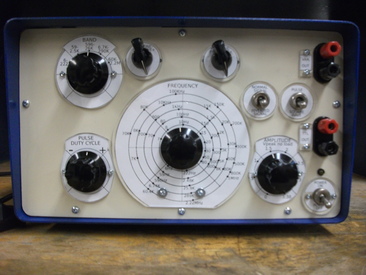
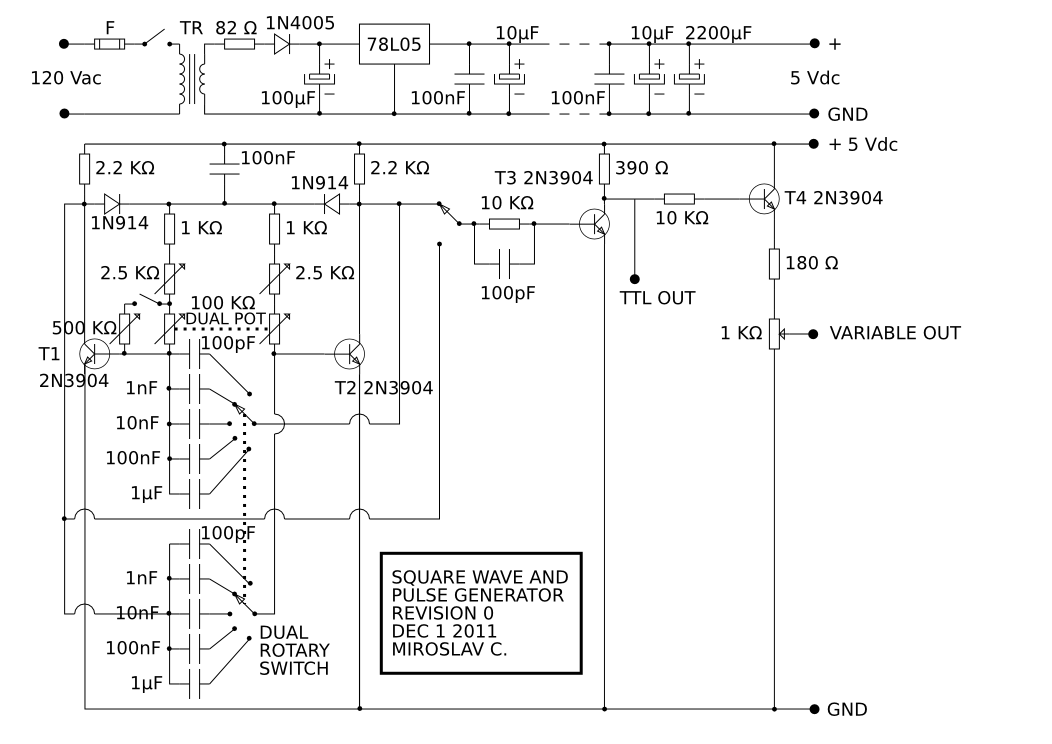
1960's style guerilla homebrew 6 Hz - 2 MHz function generator with 4 transistors

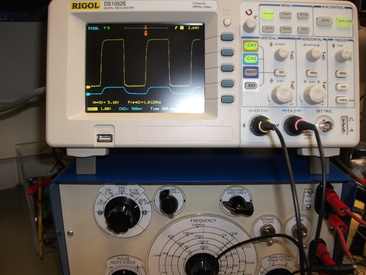
A very neat construction project from Miroslav Cika. Miroslav's project generates square waves up to 2.22 MHz and pulses with a variable duty cycle from 1-49% and 51-99%. Output is either 5 Volt TTL levels or an adjustable 0-3.38 level. 

This piece of test equipment could be very useful for designing and debugging digital electronics. The design is flexible enough that it can be modified to suit your needs.

Click the following link to go to his page describing the build process : http://www.arthropodsystems.com/SquareWaveGenerator/SquareWaveGenerator.html

Front view showing controls
Circuit diagram, just four transistors.
Output at 1Mhz on scope