Showing posts with label test equipment. Show all posts

Sunday, May 13, 2012

Hollow state decade counter.

If you have looked through my blog you'll know that I have a soft spot for tubes and tube technology. At a time when our understanding of electron mechanics and quantum theory was still in development the manufacture of advanced vacuum tubes was part science, part physics and part art.
Special purpose tubes were developed in their thousands to meet the needs of commercial, scientific and industrial applications. Their form and functions were as varied as the devices they were installed in. Sometimes tubes were developed to meet a specific need and sometimes new tubes were developed for applications not yet in existence.
The E1T tube is impressive even among special purpose tubes. It functions as a decade counter with an inbuilt display! Many years later it would take several chips and associated display circuitry to achieve the same result using solid state components.
This is a somewhat long introduction to the excellent article by Ronald Dekker on the people and the story surrounding the development of vacuum tubes technology in Holland and the E1T tube in particular.
If you have a moment take a look at The making of the E1T by Ronald Dekker and revisit a time when electronics, physics and art were brought together to create 'technology for a better tomorrow".

Wednesday, March 28, 2012

Another hand-made vacuum tube!

Another hand-made vacuum tube video! This time it is a French amateur radio operator by the name of Claude Paillard creating a more familiar type of triode tube with a custom four pin base.


The video runs for approximately 17 minutes and is accompanied by an instrumental version of "The Man I Love" written by George Gershwin.

Tuesday, March 27, 2012

Now I understand - Measuring capacitance with a micro-controller

The excellent article by Rajendra Bhatt explains not only how capacitance can be measured but also how a micro-controller can be interfaced to an analog circuit to create a useful piece of test equipment.


Capacitance meter by Rajendra Bhatt
I found the explanation of the RC time constant method of measurement as interesting as the micro-processor project itself and congratulate Raj on demonstrating a practical and workable real-life example of what can normally be a dry textbook subject.

Click here : http://embedded-lab.com/blog/?p=4400 to read the article which includes everything you need to duplicate his project. 

The page is part of the excellent http://embedded-lab.com/ web site which is well worth a look. I know it is going in my bookmarks and RSS feed.

Tuesday, March 6, 2012

EICO Model 625 Tube Tester

I attended the Greater Houston Hamfest and as I walked past the tables of equipment I wondered if interest in vacuum tube equipment was starting to wane. Compared to the last few years the prices of collector quality gear had held steady but parts and restorable gear seemed to be going for less.  I'd like to know your thoughts if you've noticed trends one way or the other.

I was happy to pick up a EICO Model 625 tube tester for $15. It is in good condition and appears to work well. The roll of settings for each tube is in good condition and a little searching on the internet supplied settings for older tubes like the number 78 in the picture below.

EICO Model 625 Tube Tester with a number 78 tube
The EICO 625 is not a top of the line tester but it does basic tests and will let you know if a tube is functioning and an idea of the life left in it. It was sold in kit form for $34.95 in 1958 which is roughly equivalent to $274 in 2012.

Inside the EICO 625 from diyaudioprojects.com
The EICO 625 is fairly unique in having its own 6H6 diode tube to rectify the 30V filament voltage. It provides DC for the neon short-indicator bulb. If the tube is suspected of having a short then there is a fairly comprehensive series of tests than can be administered to isolate shorted elements.

EICO Model 625 circuit diagram
Here is the Users Manual and Roll Chart for the EICO Model 625 Tube Tester

Here is the complete TUBE TEST DATA 1/1/78 for the EICO Model 625 Tube Tester

Some settings for less common and older tubes are contained in : eico_625.zip

Excellent information on servicing and calibrating your Classic emission tube tester.

Wednesday, February 15, 2012

Now I understand - Phase Locked Loops

Every now and then I come across great books or videos that explain a concept in such a way that it becomes immediately obvious what is going on. I'm a great believer in learning by demonstration or even better, learning by doing.
I came across another explanatory video recently that I thought was too good to keep to myself. It covers a topic that was a complete mystery to me: Phase Locked Loops. We utilize them in almost every modern transmitter and receiver yet most people I have talked to view them as a black box that, fortunately, does its job well and usually without interruption.
The video below does a good job on opening the black box and showing just what makes phase locked loops ... well, lock.

Friday, January 13, 2012

An oscilloscope clock - Recycling vintage equipment without destroying it.

As a fan of vintage electronics, and vintage technology in general,  I love to see things being re-used rather than being dumped in the trash. This has the very desirable effect of preventing sometimes toxic chemicals from being released into the environment and reduces the demand for new parts that can also involve toxic chemicals during their manufacture.

The only downside to this recycling is that frequently the original function of the equipment is lost so I was pleased to see this creation from Bob Alexander. He has combined one of the oldest types of test equipment with some of the newest microprocessor based devices to bring us a Oscilloscope Clock that still functions as an oscillloscope!

Heathkit oscilloscope with AVR Oscilloscope Clock module
Bob ran into some problems while installing the AVR Oscilloscope Clock Module but was able to invert the horizontal output from the clock module before feeding it into the scope. To read about his build in detail have a look at : An Oscilloscope From the Trash

A small modification to the rear panel to allow setting the clock and switching between clock and scope.
Check the video below for a demonstration of the Sparkfun AVR Oscilloscope Clock Module in action on a significantly newer oscilloscope.

Monday, January 9, 2012

PACO C-25 Capacitor Tester

I recently attended the Houston Vintage Radio Association post holiday dinner and participated in the auction held after the meal. It was a great evening and if you have any interest in vintage radio I would suggest getting in touch with the HVRA and becoming a member.
Among other things I walked away with at the end of the evening was a PACO Model C-25 capacitor tester.

The PACO C-25 differs from my Healthkit IT-22b in that it tests both regular and electrolytic capacitors as well as using a 40Mc oscillator to enable a rough measure of capacitance using a bridge circuit.
Most of the time, with vintage vacuum tube equipment, capacitor values need only be "in the ballpark" to function perfectly so a high degree of accuracy is not required. For more accuracy I have a Heathkit impedance/capacitance bridge if required.
I have my doubts how accurate the tester would be when measuring capacitance "in circuit" but otherwise it looks to be a very useful bit of kit!
The users manual should be available here and the circuit diagram is shown below.


Friday, January 6, 2012

More cheap power supplies ...

Looks as though more folks have been putting "bargain" power supplies to the test and finding them wanting. This time it is a 5 volt USB power supply purchased in the UK that fails to deliver its advertised load.

At 560mA load the voltage has already fallen below 3 Volts, a far cry from its rated 1 Amp!
As most power supplied are simply featureless black boxes it would be nice to be able to rely on the specifications stated on the outside ... sadly you can't as the video below shows.

Thursday, January 5, 2012

Cheap accessories can damage your expensive electronics

The power supply below looks just like a normal Canon power supply, right down to the correct model number and style. If you dig deeper, or just try and use this power supply, you start to notice things aren't exactly what they appear to be.


It seems as though there are some great deals to be had on Ebay for electronic accessories but like the saying goes, "You get what you pay for!".
Giorgos discovered the difference when his Canon camera started behaving strangely and was fortunate enough to have the experience and the test equipment to show just how poorly his bargain power supply performed.
So, before you buy a cheap power supply or battery charger for your cell phone, camera or iDevice, check out the video below and decide for yourself if its really worth saving a few dollars.

Monday, January 2, 2012

Deathrays and the garage home-brewer

In days past home-brewers would often be at the forefront of new and developing technologies. Apple Computer got their start in a suburban garage, Marie Curie refined radium in little more than a garden shed and the founders of Hewlett Packard worked out of a home garage in Palo Alto.

Unfortunately we moved away from encouraging kids to "tinker" in the garage and instead we've supplied ready made entertainment in the way of game consoles, demographically targeted TV and an endless series of extra-curricula activities ... all ultimately aimed at preventing boredom and keeping kids busy.

To see some impressive tinkering, take a look at this great build from Teravolt.org. Its certainly something that could be dangerous if used incorrectly but the assumption that something is unsafe unless proved otherwise and the knowledge to know the difference is sometimes better that relying on a commercial manufacturer's assurance that everything is ok ... because sometimes it isn't.

X-Ray Machine from Teravolt.org
I don't think well raised kids will take to the streets in rampaging mobs if they are allowed to become 'bored' and I think there is the possibility that through their inventiveness they will discover and create things we haven't even imagined. Given the tools, basic education & a measure of respect we could see more garage pioneers in the coming years. While I understand the value of robot kits and 'following directions' I am more enthusiastic about the Maker movement and the great selection of micro-controllers and electronic building blocks they have created.

Looking through a hard-drive using the Teravolt.org X-Ray source

Saturday, December 31, 2011

New video from ARRL : The DIY Magic of Amateur Radio

From the ARRL:
ARRL's new video, "The DIY Magic of Amateur Radio," is an 8-minute video that follows some of the innovative, imaginative and fun ways "hams" use radio technology in new and creative ways. The presentation is directed toward the DIY (do it yourself) movement, which is inspiring a new generation of creators, hackers and innovators. The message should be helpful for existing members to shape the ways they understand and talk about ham radio.


Thursday, December 22, 2011

Coil Winding using the Gingery Coil Winder

Anyone who has seen the video below from KC9KEP will probably be wondering where he got the coil winder used to make those high Q coils with universal windings.


The design itself is based on the Morris Register Company (MoReCo) Coilmaster and modified for home brewing by Dave Gingery. His excellent book is available from lindsaybks.com and provides plans that use parts and tools commonly available in the home workshop.

Gingery coil winder by KC9KEP
Another resource for coil winders is a page from K5BCQ that shows the original Coilmaster, a different home brew plan and a large volume of useful information.
A vintage text is also available which covers inductor (coil) design in significant detail and should be downloaded by anyone who REALLY wants to know what they are doing. It is available here.

Sunday, December 18, 2011

Bad news for kit builders in the EU

G4ILO Writes ...

I’m not the first blogger to mention this item of news but it is certainly one topic that I could not allow to pass by without comment. According to the IARU Region 1 website, the EU Commission will be revising the EMC Directive and removing the exemption of amateur radio kits and modified equipment from its provisions. Products that are currently exempted would be subject to inspection and certification, a process which would make the production of kits hopelessly uneconomic. It would also potentially spell the end of home building and modification and prevent the importation of kits from the USA and other havens of relative sanity. No, this isn’t one of my April 1st spoof stories released from the Drafts folder by mistake!
I would hope that the IARU, the RSGB and other European amateur radio societies will make urgent representations to the EC to stop this proposal. But this is just one scary example of why I and many other like-minded people feel that we in the UK would be better off out of the European Union.
In fact, most of Europe would be better off without it in my opinion. Could somebody explain why, at a time when European governments are supposed to be cutting back on public expenditure, they continue contributing billions every year (only recently having voted an increase – the UK alone contributes £51 million per day) in order to fund this unelected and unaccountable Commission to employ people who live in cloud cuckoo land to produce unwanted, unnecessary and unasked-for legislation?

Original Article

Thursday, December 15, 2011

Better than X-Ray glasses

While not as simple as putting on a set of EM vision goggles this is still opens the window into visualizing radio waves and allows us to see what we previously had to imagine.


Greg Charvat N8ZRY just published this video showing off a very cool experiment with the low-cost coffee can radar system he and co-workers developed, in the fall of 2010, for MIT’s open courseware initiative.


In the video, Greg describes and demonstrates a simple circuit that causes a red/green LED on the receiving antenna to glow one color when the amplitude of the received wave is positive, and another when it is negative. Moving the LED back and forth in front of the transmitter, while taking a long-exposure photograph, gives a visual map of the wavefront in space.

Sunday, December 4, 2011

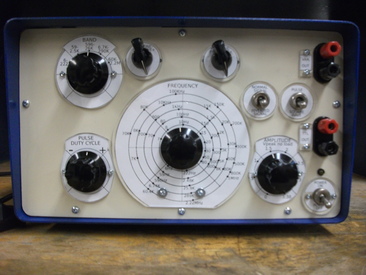
1960's style guerilla homebrew 6 Hz - 2 MHz function generator with 4 transistors

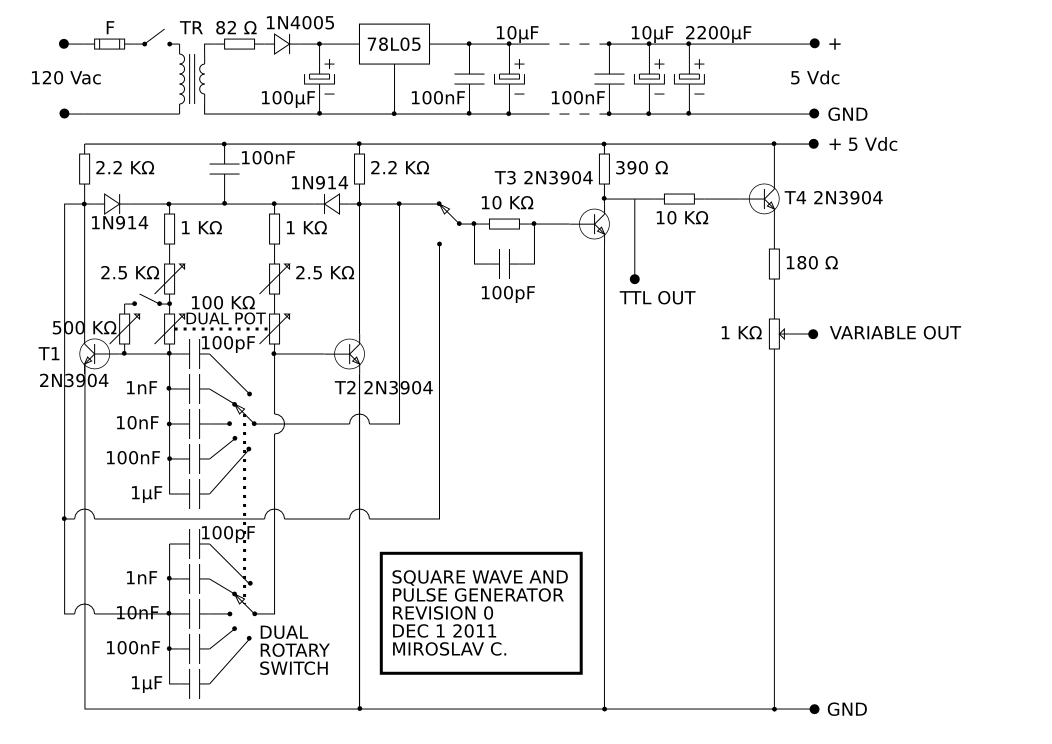
A very neat construction project from Miroslav Cika. Miroslav's project generates square waves up to 2.22 MHz and pulses with a variable duty cycle from 1-49% and 51-99%. Output is either 5 Volt TTL levels or an adjustable 0-3.38 level. 

This piece of test equipment could be very useful for designing and debugging digital electronics. The design is flexible enough that it can be modified to suit your needs.

Click the following link to go to his page describing the build process : http://www.arthropodsystems.com/SquareWaveGenerator/SquareWaveGenerator.html

Front view showing controls
Circuit diagram, just four transistors.
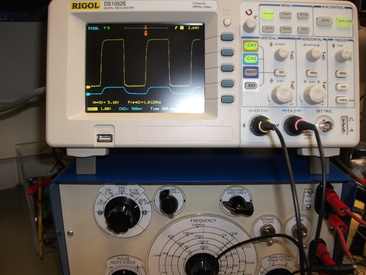
Output at 1Mhz on scope

Considering a small HF antenna? You have to read this ...

I came across this explanation of the limitations of stealth/small antennas by Dan Zimmerman, N3OX. He has provided the best explanation of the physics behind 'short' antennas that I have seen so far.

This should be required reading for anyone considering one of the stealth antenna designs such as the Tak-tenna, Isotron or Crossed Field Antennas.

I hope Dan won't mind me copying his explanation from eHam.net. It is worth your while to head over to his web site and see some of his home brew antenna projects, there are excellent explanations provided as well as the thinking that went into each design.

Once you've had a read below go on over to: http://www.n3ox.net/ and take a look at Dan's website.

"In theory, a short antenna can be made efficient enough to compare very well to a full size version, but the tradeoffs (lower impedance, narrower bandwidth) are inescapable and you need to address them carefully to make it work well in practice"

And the *most important thing* for hams who need small antennas like KB3HJK does is to never forget that those tradeoffs are fundamental.

In order to radiate a certain amount of RF power into the universe with a short dipole, you *have to increase the current* flowing along the straight bit many times over what has to flow in a half wave dipole.

If you make a very short/small antenna and want to *radiate* the same amount of power, that *requires* a much higher current flowing in the radiating part of the antenna, period.

In order to pump more current through the antenna without causing significant losses, you have to reduce the loss resistance significantly compared to a big antenna.

And an antenna that needs lots of current to radiate a given amount of power is said to have a "low radiation resistance"

The power lost to heat in an antenna is basically I^2*Rloss (the antenna current squared times the loss resistance) The power radiated is I^2*Rrad (current squared times radiation resistance).

So what does this have to do with bandwidth? Well, a couple of things. One is that when you make an antenna smaller and drive high currents in it, you make a LOT more electrons slosh back and forth in a small physical space. To focus on a short cap hatted dipole, there's a LOT of magnetic field caused by the very strong current (lots of electrons per cycle) flowing through the horizontal dipole part, and there's a LOT of electric field caused by lots of electrons piling up on the capacitance hats, first one and then the other, as the RF cycle progresses.

A capacitance hat charges up on one part of the RF cycle, a quarter cycle later, all those electrons are rushing at maximum speed toward the other hat, another quarter cycle later, they're piled up on the 2nd hat, and another quarter cycle later they're rushing back toward the first hat. Energy is exchanged between the electric field, largely between the hats and the magnetic field as the electrons are rushing through the horizontal conductor.

Since everything is so compact, the electric and magnetic fields are very strong, and store a lot of energy near the antenna.

But we also know something else... we know that the radiation resistance is very small, and to make the antenna efficient, we must reduce the loss resistance. So the *total resistance* is very low. The resistance is associated with the energy lost per cycle of RF. Some goes to heat in the loss resistance, some goes to radiation, "dissipated" in the radiation resistance.

But if you compare the energy *stored in the fields around the antenna* vs. the energy *lost per cycle*, you find that there's a lot of energy stored vs. how much is dissipated in the radiation and loss resistances. The strong fields make the stored energy high, the low resistances make the dissipation small.

So the antenna is very "high Q." If you cut power to a very high Q antenna, it will ring down for a relatively long time as the stored energy is damped by the dissipation into loss and radiation. But we know from other circuits that high Q resonant circuits are very sharply tuned, and a small antenna is no exception. It has a very narrow bandwidth over which you can slosh current back and forth effectively in a resonant way.

Since the radiation resistance and the stored energy in the fields is fixed by the size and shape of the antenna, the only way to broaden the response of a certain size antenna with fixed tuning is to add losses!!!

This is fundamental, and will steer you away from very small, broad bandwidth antennas if you keep it in mind. You absolutely, positively must give up bandwidth to keep efficiency at small size.

This is why the very best tiny antennas will all be motor driven. Magnetic loops and mobile screwdriver antennas with capacitance hats are two great examples of how to get around the narrow bandwidth problem. Sure, the antenna is 10kHz between the 2:1 SWR points, but if you can tune that 10kHz anywhere you want between 5 and 21 MHz, who cares?

But there's even a point where motor drive doesn't save you. There's even a point where superconducting antennas don't save you.

There's a lower limit that few talk about (except a few crazy magloop guys who come close to running up against it)

If you make a very very tiny, extremely low radiation resistance antenna and you stamp out almost all the losses by welding together huge conductors, your antenna's bandwidth could become so narrow as to not pass even a SSB signal. ;-)

You'd actually roll off your audio if you had a 1kHz wide magnetic loop and could make the tuning stable!

But this is the basic fact you need to remember when antenna shopping. Quite small antennas should be easily retunable in small steps across a ham band, otherwise they are required to be *quite* lossy to give good SWR bandwidth. No matter what any manufacturer says, a tiny antenna needs to be VERY small in bandwidth for it not to be lossy.

And KB3HJK, as far as that particular HF-p antenna goes? It's nearly impossible to know exactly but I expect that since it covers 200kHz of 40m with no retuning and is only 10 feet long, it's probably going to be about 1% efficent.

For comparison, I built a 40 foot long 40m dipole with a loading/matching coil at the feedpoint that should have been about 80% efficient (-1dB) and was about 70kHz between the 2:1 SWR points. End loading could improve that, but the HFp isn't end loaded.

If you really need to get on 40m better than you have been in the sort of 3-10 foot antenna class, your next antenna should have a motor.

Or if you're worried about feedline radiators because you can put the antenna 20 feet up on a pole, just go ahead and make the pole the antenna instead. N0LX has some interesting voltage fed "loaded end fed half waves" on his website, and they actually model reasonably well.

And even a Tak-Tenna type antenna is maybe OK, the problem with them is that there's NO REASON to use a 30 inch antenna on 40m. It's too short. Do the same thing but make it 15 feet long and you'll be much better off.

73
Dan 

Wednesday, November 30, 2011

Making a Spherical Audion Tube by Ron Soyland

Another great series of videos from Ron Soyland. In this video he recreates the classic Audion tube invented by Lee De Forest in 1906. The particular tube he creates in this video appears to be similar to the 1909 version of the Audion but substantially better made. The original Audion tubes were usually crudely constructed without the benefit of modern tooling or our current understanding of thermionic emission, they were expensive and had a short lifetime but paved the way for better tubes in the following years.

Tuesday, November 29, 2011

Essential information regarding 6146 tubes by K9STH

The 6146 family of tubes has been used in many home-brew commercial and transmitters over the years. The following information explains important points to look out for when replacing these tubes or home-brewing your own 6146 based transmitter. Normally I don't just copy and paste an entire article but this information should be included in every 6146 based rig's instruction manual, in bold type, at the start. KF5CZO

6146/6146A/6146B/6146W 8298/8298A/6293 
*6883/*6883A/*6883B *8032/*8032A/*8552 
Tubes Explained 
(*12 volt filament)
By K9STH 

The 6146 and the 6146A differ in the type of heater (filament) and can be "mixed" in use (i.e. one 6146 and one 6146A in a DX-100). There are no other differences. The heater in the 6146A was developed by RCA and is called a "dark heater". The type 8298 is the same tube as the 6146A.

The 6146B is the same tube as the 8298A. The 6146B is a different tube from the 6146/6146A/8298. Sometimes they will work in place of the 6146/6146A, but often they will NOT. This is due to the different bias requirements of the 6146B, different inter-electrode capacitances, among other things. Often it is impossible to either neutralize the final in a rig designed for the 6146/6146A or the neutralization does not "hold" for very long (often less than an hour).

The 6146B/8298A have a very bad habit of producing VHF and UHF parasitic oscillations which can cause all sorts of problems including TVI as well as the tube literally "burning" itself up. This is when they are used in circuits that were designed for the 6146/6146A.

Collins Radio had to modify production of the later S-Line units to allow the military to use 6146B type tubes. This required a redesign of the neutralization circuit which is in place in the later 32S3, 32S3A, KWM-2, and KWM-2A units. The earlier versions of these models must use the 6146/6146A tubes. The later version can use all three types.

There is a "pulse" tube that is a very heavy duty version of the 6146 and can be substituted without any problems. This is the 6293. A 6293 will outlast a "plain" 6146 by at least 5 times the life (over 10 times is not that unusual!). We would "kill" back in the late 1950s and early 1960s to get our hands on a pair of 6293 tubes for our DX-100s, etc.

The 12 volt equivalent of the 6146 is the 6883. The 12 volt equivalent of the 6146A is the 6883A/8032 and the 12 volt equivalent of the 6146B is the 6883B/8032A/8552. The same thing is true of these tubes, do not replace the 6883/6883A with the 6883B series of tubes.

Back in the late 1970s Motorola tried to replace all of their 6883A/8032 tube stock with 6883B/8032A/8552 type tubes. A very large number of Motrac units used the 8032 and only the very "latest" versions used the 8552 tubes. At the time I owned the Motorola reconditioned equipment center for the south-central US and we used, on average, over 100 8032 tubes a week. Just as soon as Motorola replaced the 8032 with the 8552, we started having virtually all of the Motrac units that were shipped to the customer arrive with the tube envelopes "shattered" by "normal" shipping. We had never had this happen before.

The construction of the Motrac is such that the tubes cannot be seen when the unit is assembled. What was happening is that in the 2 to 5 minutes that the radio was being tuned and final QC'd, that they were oscillating at UHF (parasitics) and the tubes were getting so hot that the glass envelope was destroyed!

We told Motorola what the problem was. However, they refused to believe us until they had well over 1000 warranty complaints from their service stations. It cost them quite a lot of money in warranty repair bills before they again started placing 8032 tubes in the boxes marked 8032!

I have quite a number of "boat anchor" rigs that use the 6146/6146A type of tubes including Collins 32S1, 32S3; Heath SB-110A, SB-401, DX-100, DX-35, Apache. I have owned rigs like the Knight T-150 and T-150A and others that were designed for the older tube. Frankly, all of them are much "happier" with the 6146/6146A instead of the 6146B.

Now, for the 6146W: Unfortunately, some of these are "ruggedized" 6146A tubes and the later ones are 6146B equivalents. The only way to tell is by the manufacture date on tubes by a particular manufacturer. Unfortunately, to my knowledge, there is no master list giving this information. Each manufacturer changed from the 6146A to 6146B construction in their 6146W at different times.

I haven't seen a notice from Heath about using the 6146B tube. However, several manufacturers, including Collins Radio, originally said that it was fine to use the newer tubes. But, after a very short period of time they found out different!

Thus, I would be very careful about using the 6146B and the 6146W tubes in place of the 6146/6146A. You might "get away" with it. However, you might also do some damage to your final amplifier section. If you decide to try the 6146W, then be sure and neutralize the final and check it after operating for an hour or two. If the neutralization remains OK for several days, then you should be "home free". But, if the neutralization changes, then you need to replace the 6146W tubes with the 6146/6146A types.

Glen, K9STH

Sunday, November 27, 2011

New project - Heathkit SB-101

I've recently been presented with a Heathkit SB-101 transceiver, Heathkit SB-600 speaker and Heathkit HP-23A power supply courtesy of Philip KJ5OW of the Katy Amateur Radio Society.

The SB-101 is a hollow state rig, the only solid state components being a few diodes. It uses the well known, and fortunately fairly common, 6146 output tubes in the finals.

The manual is available here : Heathkit_SB101_Manual

Heathkit SB-101 Transceiver
There looks to be a little work required before this rig is put on the air, a few resistors have cracked for reasons unknown and the rubber belts need replacement in the load and tune controls. It is something worth taking time on as the SB-101 is a well regarded rig that is still a strong performer today. There have been some modifications made to support an external linear master oscillator (VFO) which will need to be looked at but are probably fine as they stand.

I pulled my Heathkit HD-1410 keyer out of storage and was pleased to find it was the same color and style, matching the SB-101.

Heathkit SB-101 transceiver, SB-600 speaker, HP-23A power supply and HD-1410 electronic keyer.
Specifications:

Year of Manufacture: 1967-70 (Improved SB-100[1965-7])
Bands: 80 - 10 (500kc) (2 Mhz on 28-30 mhz)
Modes: CW & SSB
Power: 180W PEP SSB & 170 input CW - 6146 Output Tubes
Frequency Control: LMO- Linear Master Oscillator (Like PTO)
Selectivity: 6 Pole filter 2.1kc @ 6db down (Accessory CW filter 400hz)
Contstruction: Aluminum Chassis & Cabinet-Printed circuit board wiring
Keying: PTT and VOX voice operation, VOX with sidetone for CW
Power Supplies: AC or DC power supplies availiable
Microphone: High Impeadance Desk or Mobile Microphones availiable.
Frequency Control: Local LMO/Xtal, Remote VFO/SB-640 w/Mod

Accessories: SB-200 Linear Amplifier, SB-500 2mtr Xvtr, SB-600 Speaker, SB-610 Monitor Scope, SB-620 Panadapter, SB-630 Station Console, SB-640 Remote VFO & SB-650 Digital Read-out.

Features: Easy to operate, TX & RX circuits track, RX RF Preamp, Easy to calibrate and read dial calibration, Two-Tone Green wrinkle paint, Switched Metering, Construction Manual very comprehensive.

Heathkit Transceiver Resources:


Sunday, November 20, 2011

Latest restoration project - Espey R-366/TRR-5 Radio Receiver

The Espey R-366/TRR-5 is a general purpose receiving set designed for use as an entertainment unit or auxiliary communications receiver. The receiver is a manually tuned, 16 tube superheterodyne. It has a tuning range of 540 to 30,000 kc in five tuning bands and receives either CW or voice signals.

It is similar to the Scott receiver AN/SRR-3 of the same period and produced under Contract NObsr-43229 dated 15 March 1949.


A user manual is available here : ANTRR5_INSTRUCTION_BOOK

The front panel as it originally looked.
The front panel once it had been cleaned.

First page in NAVSHIPS describing AN/TRR-5 and performance specifications.
Detailed shipping information for AN/TRR-5 receiver.
From the Antique Radio Forums :
Most of them were purged via DRMO in 1968-1973 and I only saw small numbers of them trickling through the system so I am guessing they were made in only a small quantity. None of the ones I have run across have had cabinets and all were in pretty atrocious condition. I vaguely recall the processing papers showing the equipment had come back from Vietnam, Guam, S. Korea and Japan.
Geoff Fors - WB6NVH

If you have any information regarding these receivers please leave a comment. If you have a R-366 of your own please let me know the serial number in the comments!

R-366/TRR-5 serial number registry:
  1. #623 : KF5CZO - Owen Morgan
  2. #050 : AE5VB - Hugh Coleman
  3. #132 : W5AMI - Brian Sherrod
  4. #591 : KC9KUH - Brian Love : (Compliance plate missing)
  5. #290 : KC5IIE - Chris Krug (Update 01/11/2012 : Sold to W5XTL - Jeramy Ross)
  6. #653 (Sold on Ebay, spotted by Brian KC9KUH)
  7. #251 (Sold on Ebay, spotted by Brian KC9KUH)
  8. #340 (Sold on Ebay, spotted by Brian KC9KUH)
  9. #468 Jeff Wewers
  10. #140 Gilbert Mendez
  11. #097 James Starling
Using the formula N=m(1 + k − 1) − 1  from the german tank problem where m is the largest serial number observed and k is the count of serial numbers we see that the current estimated number of R-366/TRR-5 receivers produced is N=653(1+11 − 1) − 1 or approximately 711.

After bringing this receiver up on a variac to reform the filter capacitors I monitored the power usage and found it to be in line with the users manual @ approx 125W.
Audio is great due to the push-pull output stage and either a 6 ohm or a 600 ohm speaker can be used, both impedances are available on the rear connectors.
Readout seems accurate and the VFO is stable after just a few minutes warmup. Tuning the HAM bands is fairly touchy but this is really an AM rig by design.

Serial number 623 of how many? This seems to be a rare radio but I have heard of at least 4 other people with the R-366.

The bandchange is accomplished by rotating the circular turret. Each of the five bands has a complete set of discrete components in its sector of the drums.

Military amphenol right angled connectors. The three pin connector is 110V power in and the four pin is the 6/600 ohm speaker connector.
I was fortunate enough to be given period style military connectors for these sockets. Both neutral and active lines are fused on the power input circuit however I made sure to wire the active line to the power switch side for safety.

The receiver chassis slides out on roller slides for servicing and inspection. The full circuit diagram is also on the band change turret cover ... a thoughtful addition!

The only modification I can find is the antenna connector. Its been replaced with a SO-239 bulkhead connector for convenience. Personally not something I would have done myself but it makes life easier so I'm not complaining.

An unmodified antenna connection from another Espey R-366